


Has your toddler ever dropped a spoon from the highchair again and again, just to watch it fall? Or built a tower only to knock it straight back down? That is early science and engineering at work. STEM for toddlers isn’t about worksheets or right answers. It is about curiosity, trying things out and noticing what happens.
STEM stands for science, technology, engineering and maths. It can sound like something for school, but little ones start building these skills much earlier, through everyday play. Learning through play is also at the heart of our Sensory Pioneers class. Below, you’ll find what STEM looks like at this age and what the research says. We’ll also look at how our class equipment supports it, plus some easy ideas to try at home.
What does STEM mean for toddlers?
For toddlers, STEM isn’t a subject. It is simply part of the way they already play. Here is what each letter can look like at this age:
- Science: noticing, wondering and testing. What happens if I drop this? Where did the light go? Will it roll or slide?
- Technology: simple tools and cause and effect, rather than screens. A torch, a scoop, a ramp or a button that makes something light up all count.
- Engineering: building, stacking, balancing and, of course, knocking things down. Every tower that topples teaches something new about balance.
- Maths: counting, sorting, matching, and spotting shapes and patterns. It also includes the language of maths, such as bigger and smaller, more and fewer, and in, on and under.
None of this needs a plan or special equipment. Mostly, it needs time to explore and a grown-up nearby to share it with.
How our sensory equipment supports STEM at Sensory Pioneers
Sensory Pioneers is our Little Senses class for crawlers and toddlers. Each week has a different theme, from Under the Sea to Outer Space, and plenty of time for sensory free play. You stay alongside your little one throughout, so you can explore together. We don’t run it as a STEM lesson. Instead, we choose equipment that invites this kind of exploring and let little ones take it at their own pace.
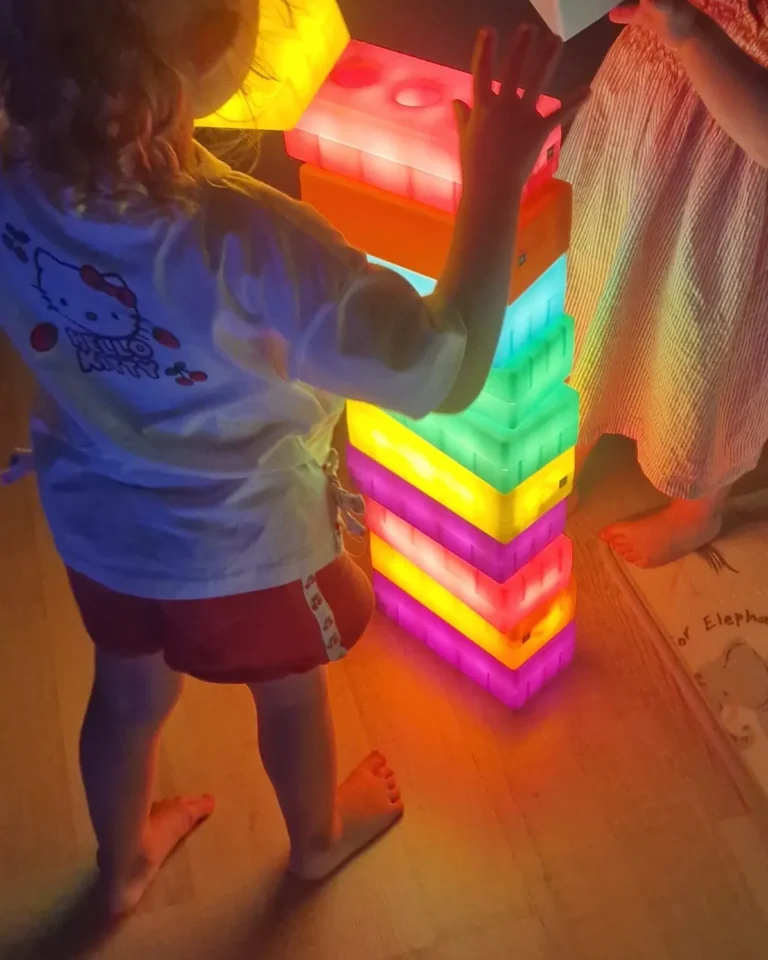
Glowing light-up blocks
Stacking light-up blocks is engineering in its simplest form. How high can the tower go before it wobbles? What happens when a big block sits on a small one? Sorting blocks by colour, counting them as they go up and comparing towers are all early maths. And when the tower falls, everyone gets to start again.
Fibre optic cables
Light travels along each strand of our fibre optic cables, so the tips glow and the colours change. Toddlers can scoop them up, shake them and peer at the glowing ends. It is a first taste of the science of light. It is also a lovely moment for words like bright, dark, red and blue.
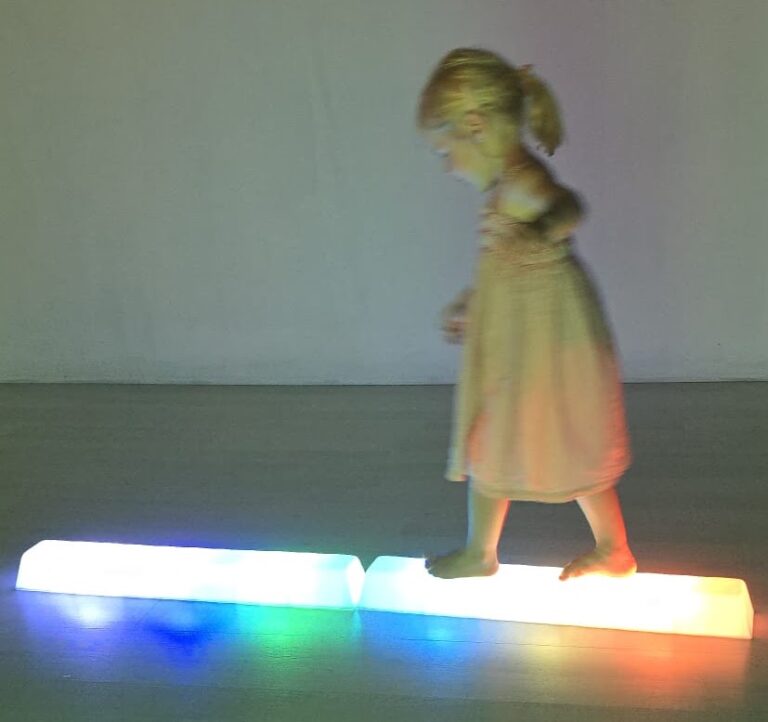
Light-up path
Stepping along the light-up path brings together balance, counting and colour. For example, you can count the steps together and name each colour as you go. Crawlers can explore it too, at their own pace, with you close by.
Open-frame sensory cube
We set up our open-frame sensory cube differently each week to match the theme, with new textures and objects to find. It is a natural place for position words like in, out, through and behind. Name each one when your little one moves in and around the cube. Understanding where things are in space is an early building block for both maths and engineering.
Themed tuff tray
Our tuff tray changes with each week’s theme too, laid out as a small world for little hands to explore. Toddlers can sort and count what they find, match things that go together and make up their own stories. It is also a great spot to wonder out loud together: “Where do you think the crab lives?”
Ribbon parachutes and bubbles
Bubbles are a gentle first look at air and gravity. They float, drift and eventually land or pop, and toddlers love trying to catch them. With the ribbon parachutes, we count “1, 2, 3, up!” together, lift the ribbons high and watch them flutter back down. That simple count is early maths too.
Easy STEM ideas for toddlers to try at home
You don’t need special kit to explore STEM with toddlers at home. Instead, these simple ideas use things you probably already have.
- Tower challenge: stack cups, boxes or blocks as high as you can. Count them together, then let your toddler knock them down.
- Shadow play: in a dim room, shine a torch at a wall and hold a toy in front of it. Move the toy closer to the torch and watch the shadow grow. Keep the torch pointing at the wall, not at faces.
- Colour sort: put out two or three bowls and sort toys, balls or socks by colour.
- Ramp races: lean a tray or a piece of cardboard against the sofa and roll balls or toy cars down it. Does a steeper ramp make them go faster?
- Sink or float: at bath time, guess together which toys will float and which will sink, then test them.
- Pattern line: lay out a simple pattern, such as red, blue, red, blue, and see what your toddler thinks comes next.
Whatever you try, stay close throughout, especially with crawlers and toddlers on the move. Keep small parts and anything with button batteries well out of reach, and never leave your little one alone near water.
How to talk about STEM with toddlers
The words you use during play can make a real difference. You don’t need to teach. Instead, just chat about what you can both see.
- Wonder out loud: “I wonder what will happen if we add one more block?”
- Count and compare: count stairs, socks or ducks in the bath, using words like more, fewer, bigger and smaller.
- Use position words: in, on, under, behind, next to and through.
- Let it fall: try not to rescue the wobbly tower. Finding out what happens is part of the experiment.
- Ask what they noticed: try “What happened?” rather than quizzing them on colours or numbers.
If your toddler isn’t using many words yet, that’s completely fine. Pointing, signing, sounds and big smiles are all ways of joining in, and little ones understand far more than they can say.
Come and explore at Sensory Pioneers
Sensory Pioneers runs in English in Marbella, for crawlers and toddlers, with you alongside your little one throughout. If your baby isn’t crawling yet, take a look at Discovery Senses, with sensory play alongside gentle baby massage and yoga.
Curious about the glowing side of things? Our post on the benefits of light play is a good next read. And if you’d like to see how your toddler gets on, you can book a single class online.